

The race to be the most pig-ignorant online True Believer is a crowded field, but one contender has recently pulled clear of the pack:
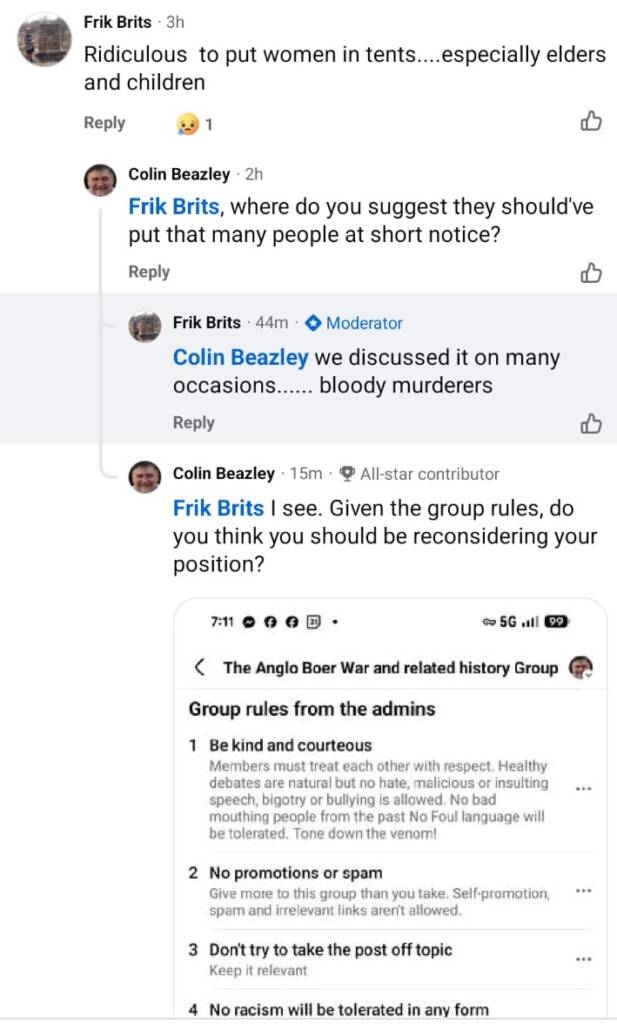
The level of foolishness needed to equate ‘being given tents to live in’ (plus food, medical care, education etc etc) to ‘bloody murder’ is almost incomprehensible, and yet Mr Brits (a splendidly ironic name for a True Believer) is so mind-blowingly ignorant that he really seems to believe this. Perhaps Mr Brits is blissfully unaware that, even today, refugee camps typically use tents as means of temporary housing? Maybe these images will shake him out of his National Party induced / self-inflicted stupor:

A modern day UNICEF camp for Eritrean refugees
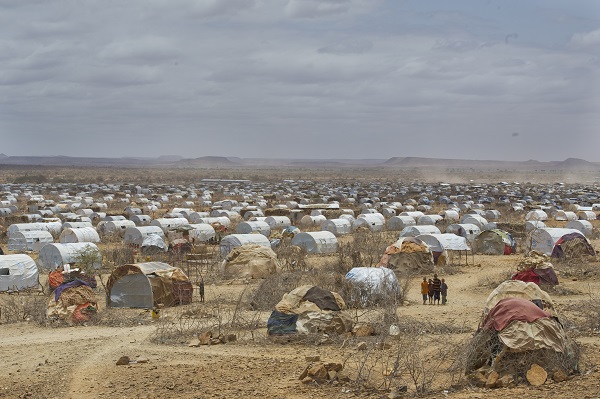
A modern-day camp for Somalian refugees in Ethiopia
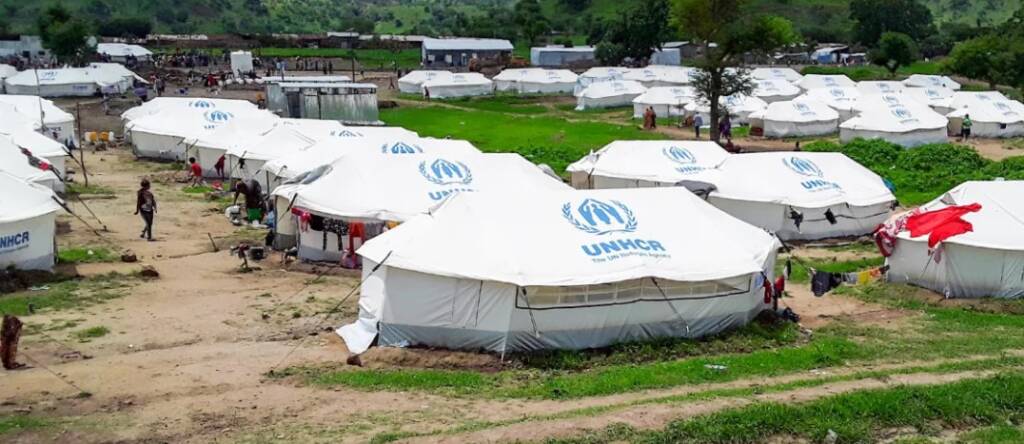
Modern-day UNHCR camp for Sudanese refugees
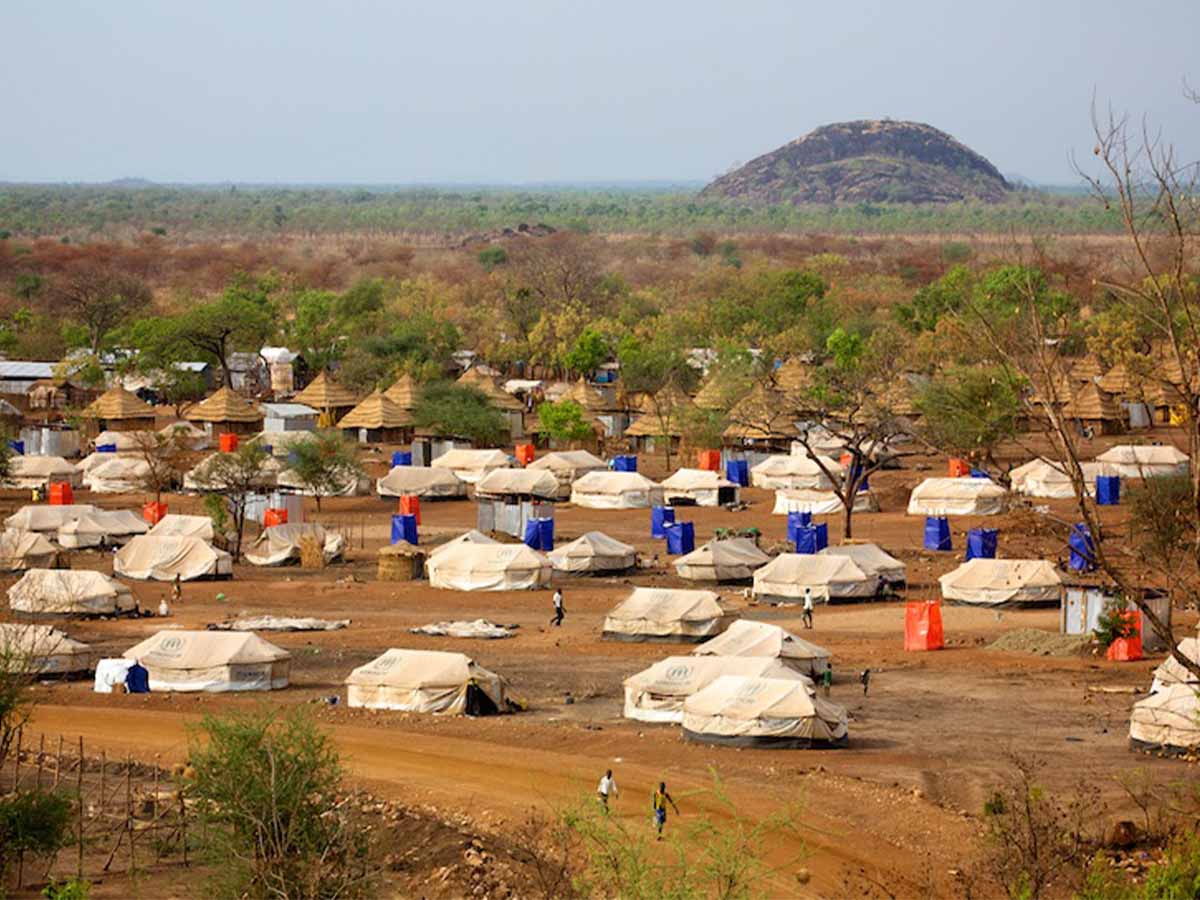
Modern-day MSF camp
So rather than bleating and squealing about refugees being housed in tents 125 years ago, why doesn’t Mr Brits direct his hand-wringing faux-anguish to the way the UNHCR, UNICEF, and Médecins Sans Frontières are treating refugees today? Wait – let me guess… that’s different, right?
Furthermore, it clearly escapes the laughable Mr Brits that British army troops also slept in bell tents throughout the Boer War, as, indeed, did the nurses[1] based at the camps that he pretends had murderous intent. In fact, this was the case for the army for many decades before and after:
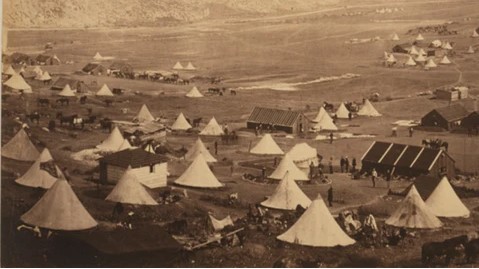
British cavalry regiment camp, Crimean War

Boer War: ‘pineapples at twopence’
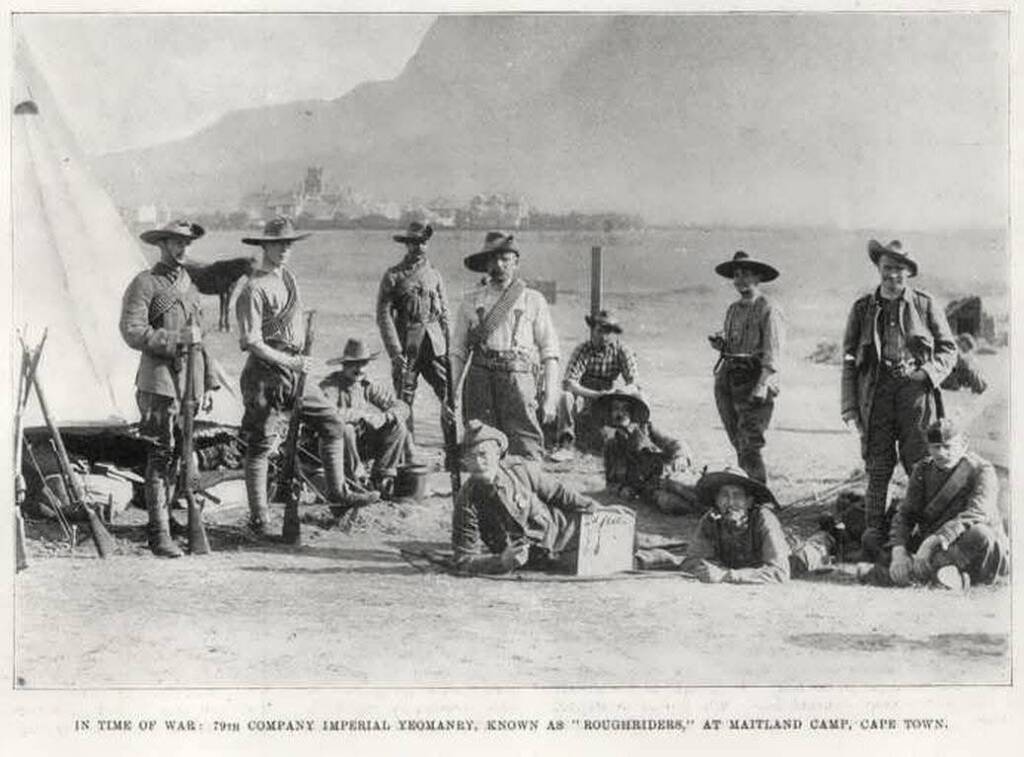
Boer War: Rough Riders pose outside their bell tent

British army bell tents, Great War

British army bell tents, Second World War

QARANC nurses at their tent in North Africa, Second World War
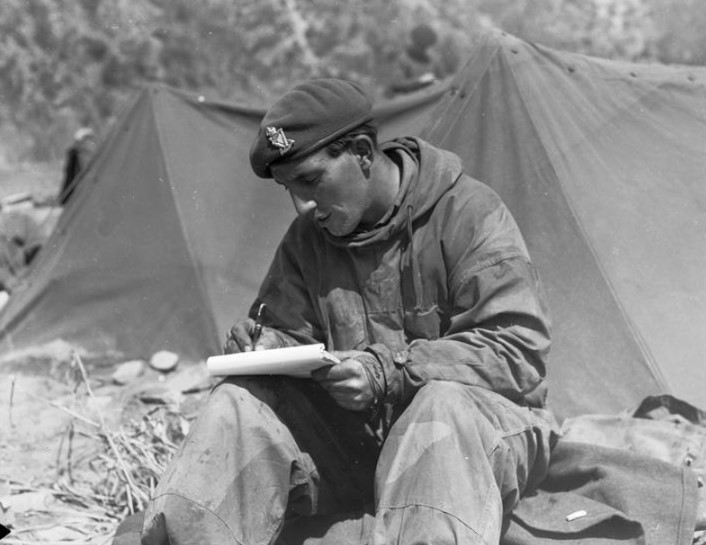
British army tents in the Korean War… but I think you get the idea by now
Mr Brits is possibly unaware that some people even indulge in a pastime called ‘camping’, in which they go away for days at a time, with the express purpose of sleeping – wait for it – in a tent. Indeed, one can still buy a bell tent, and these are aimed squarely at the glamping market:

‘Bloody Murderers’ indeed
Now we have – I hope – established that being given a tent to sleep in is far from an act of evil, let alone the equivalent to ‘bloody murder’, it might interest Mr Brits to learn how the British looked after the loyalist refugees… the ones who were driven from their homes by the invading Boers. Yes, that’s right, Mr Brits, you read it here first: the poor, innocent, blameless Boers started the Boer War by invading Natal, and the Cape:
‘…the English refugee camps at Durban, where the people are living like Kaffirs in huts made of tins and boxes. The contrast with the trim rows of tents in the Boer refugee camps with free rations, hospitals etc, is rather too painful. One cannot help feeling there has been a grave oversight on the part of the British Government to support the Boers and do nothing for our own people.’[2]
And I am sure it will astound Mr Brits to learn of the protests to Lord Milner accusing him of ‘leaving the British refugees in idleness and poverty at the coast, in order to keep the people in the concentration camps supplied with every luxury and comfort’.[3]
Few would claim that the residents of the camps lived in ‘luxury and comfort’, of course, but were conditions really as bad as Mr Brits and the howling hoi polloi like to pretend?
In reality, and despite why you might have seen in the ‘de la Rey’ music video,[4] camp inmates were not ‘imprisoned’ behind barbed wire—whatever their faults, the camps were not prisons, but genuine refugee camps aimed at providing relief.[5] Even in the few camps close to areas where bittereinders remained active, and despite the obvious opportunity to provide the guerrillas with information and supplies, residents were free to leave camp twice a week.[6] In safer areas, and aside from the night-time curfews, inmates were free to come and go exactly as they pleased:
‘The camp people also come into Krugersdorp and spend money in the shops there. In one very good tool shop which we visited the man spoke bitterly of the camp women coming in and spending ‘money by the sovereign.’’[7]
Many families even retained their black servants during their sojourn – the hardship! Generally, the blacks were kept segregated but could attend to their employers during the day, though in other instances, servants shared accommodation with their masters. At the Barberton camp, for example, it was recorded:
‘…there are over a hundred native servants, principally with their families, who have accompanied their employers … there appears to be undue familiarity; some natives sleeping, eating and drinking the same tents as whites.’[8]
Could the concentration camps of the Boer War have been the only ones in history where residents retained domestic staff?
In another, one lady seemed to have been living very comfortably indeed:
‘…in one very smartly furnished tent with carved oak and red velvet chairs the woman had chickens and guinea pigs inside, the latter of which she was feeding on raw carrots. She was very cheerful and conversational, and said she had plenty of chickens when she first came to camp, but ‘though they only had two legs to start with, in camp they quickly got four.’’[9]
Residents received rations courtesy of the long-suffering British taxpayer – rations, incidentally, which were the same as those issued to the camp nursing staff,[10] and better than British soldiers enjoyed in peacetime.[11] Desperate to keep his comforting myths alive however, the High Priest of the True Believers frantically attempted to deny that last point in his panic-stricken ‘review’ of my work; rather more open-minded readers will note that my reference for this is none other than that arch-Jingo, Emily Hobhouse.
Though it suited National Party propagandists (and their modern-day useful idiots) to pretend the residents were ‘starved to death’, almost the exact opposite was found when the Ladies’ Commission[12] reported on the situation:
‘Considering the ample provision of all necessities for the healthy and of necessities and luxuries for the sick which has been made, it is rather difficult to find a suitable channel into which to direct the flow of private charity … with some trifling exceptions, in which, from the fund placed at our disposal by the Victoria League, we supplemented in a few camps the supply of medical comforts, or established a soup kitchen, we have recommended that the main body of the fund should be used for the promotion and development of education.’[13]
Additionally, the camp residents were encouraged to supplement their diets by planting vegetable patches and these soon became commonplace[14] – which would be a rather strange thing to do if there was any wicked intent at ‘starvation’. Furthermore, local traders also visited the camps to sell fresh fruit and vegetables.[15] In addition, for the large numbers of residents who found work, or who arrived with money, all the camps had shops with prices approved by the superintendent, or kept low by competition.[16] By all accounts many of these did a roaring trade:
‘…the camp store in Klerksdorp took £30 to £40 per day, Potchefstroom camp store took £50 to £60 per day, whilst Vereeniging store might take as much as £150 a day. Howick and Pietermaritzburg supported three camp shops, Bloemfontein ten or eleven, whilst Aliwal North had as many as thirteen … whilst milk, tinned fish, dates, sweets, Worcester sauce, chow-chow were amongst the most popular items, many luxury articles were also in demand, such as gramophones, watches, concertinas at 25s, silk fronts, photographs. In one camp women’s corsets were becoming fashionable.’[17]
One camp where the shop was rather less successful was Volksrust as its prices were the same as those outside, and many residents preferred to take a pleasant stroll into the town to pick up their groceries.[18]
Of course, and as we all know, there were issues in some of the camps, and there is no denying that lives were tragically lost in them – though this was hardly unexpected when one considers both the typical infant mortality rates of the period,[19] and the rarely-mentioned (and highly inconvenient) reality of a measles epidemic. But what Mr Brits studiously – and with shameless duplicity – ignores, is that most of the issues concerning cleanliness and sanitation were caused by the fact that many residents had zero concept of hygiene, again as reported by the Ladies’ Commission:
‘…it is necessary to put on record the insanitary habits of the people. However numerous, suitable and well-kept may be the latrines provided, the fouling of the ground, including river banks, and slopes and trenches leading to the water supply, goes on to such an extent which would probably not be credited except by those who have seen it … the extensive fouling of the floors of tents and the ground of camps by it has been the direct cause of a devastating attack of enteric in more than one camp.’[20]
Dr Richard Hamilton of the Volksrust Camp explained the link between this lack of hygienic practices and the spread of sickness:
‘Illness is more prevalent in the older portion of the camp; this I believe to be due, in many cases, to the filthy habits of the burghers, and to the number of children. After a few weeks, the ground on which the tent is pitched becomes soaked with urine, slops, sputum etc, and, if it were possible, I would advocate the removal of a section of the camp every month.’[21]
One recent examination on the history of the camps concedes:
‘Boer farms often lacked any form of sanitation. Accounts of Boer sanitary practices, though much resented by middle-class Afrikaners then and later, are so graphic and so frequent that there can be no doubt that most Boers in the camps, who were bywoners (landless farmers) rather than middle class, lived in comfortable association with human and animal excrement.’[22]
As well as simply living in ‘comfortable association’ with it, animal excrement was viewed by many inmates as something of a cure-all. One medical historian recorded:
‘The intestinal contents of different animals or their excreta were believed to possess almost magical healing qualities.’
The rather less-than-yummy-sounding goat-dung tea was a popular remedy for measles, while pieces of raw meat were bandaged over eyes to cure conjunctivitis, and all manner of things were inserted into babies’ ears.[23] Though Hobhouse and other violently anti-British accounts remain resolutely silent on the subject for fear of torpedoing their own case, the peculiar remedies of poorly educated backveldt Boers greatly exacerbated the death tolls in the concentration camps:
‘It was to this hospital in July last that unfortunate children were brought, whose mother had painted them with common green oil paint as a remedy for measles. There were three of these children, one died in the tent; the other two were brought into hospital, but their lives could not be saved. They died from the effect of arsenic poisoning. Not content with painting their bodies, the mother had, in the case of one child, added a plaster of American cloth thickly daubed with the same paint. The nurses told us that it was very common among the Boers to tar a patient’s feet as a remedy for fever. Dogs’ blood was recommended for fits and so on. The nurses spoke of one case where a child in a tent was in a high fever (temperature 104) from measles. The mother utilized the heat thus generated by putting the bread, which she had just made, inside the child’s bed to cause it to rise.’[24]
But no – to fanatics like Mr Brits – all this is utterly irrelevant… as irrelevant, indeed, as the awkward fact of the measles epidemic that swept through South Africa at the time. What really matters is that the dastardly British authorities provided the refugees with tents to live in. And that, in the wacky world of Mr Brits, makes them ‘bloody murderers’.
You really couldn’t make this nonsense up. But such is the level of blinkered ignorance and fanaticism required to keep the myths stumbling on a little longer.
NOTES:
[1] van Heyningen, The Concentration Camps of the Anglo-Boer War, p.214
[2] Martin, The Concentration Camps: 1900‒1902: facts figures, and fables, p.19
[3] Headlam, The Milner Papers, Vol.2, p.298
[4] Sorry, True Believers: this terrible song and accompanying video is not generally accepted as a valid historical source
[5] ‘Fools Rush in—writing a history of the concentration camps of the South African War’
[6] Martin, The Concentration Camps: 1900‒1902: facts figures, and fables, p.58
[7] Milne, Anecdotes of the Anglo-Boer War, p.28
[8] Warwick, Black People and the South African War, 1899‒1902, p.148
[9] Milne, Anecdotes of the Anglo-Boer War, p.28
[10] van Heyningen, The Concentration Camps of the Anglo-Boer War, p.214
[11] Hobhouse, The Brunt of the War, p.159
[12] Formed in 1901 in response to Hobhouse’s complaints about conditions in the camps, this was headed by the outspoken activist for women’s rights, Millicent Garrett Fawcett (1847 – 1929); the commission was certainly no white-washing exercise, or attempt at a cover-up
[13] Martin, The Concentration Camps: 1900‒1902: facts figures, and fables, p.55
[14] ‘A Tool For Modernisation? The Boer concentration camps of the South African War, 1900–1902’
[15] Ibid
[16] van Heyningen, The Concentration Camps of the Anglo-Boer War, p.253
[17] Martin, The Concentration Camps: 1900‒1902: facts figures, and fables, p.61
[18] van Heyningen, The Concentration Camps of the Anglo-Boer War, p.254
[19] Neither Boer republic troubled itself to monitor infant mortality before the war, but the 1890 Transvaal census reveals an astoundingly low number of infants—an indication of chronic infant mortality described as a ‘real anomaly’. The best we can do to get an impression of the scale of the issue is to use the figures from the much more developed and more benign / non-malarial Cape Colony. Modern day infant mortality in the UK is 4.5 per thousand: between 1896 and 1898 the average infant mortality rate among white children in the Cape was 180 per thousand. Between 1896 and 1900 in the town of Cradock, it was 395 per thousand; that is to say that almost 40 per cent of European children born in Cradock did not make it to their first birthday during that period. The figures for coloured babies were even more ghastly, with an average infant mortality rate across the Cape of 332 per thousand in 1896, so even in peacetime one in three coloured babies did not live past one.
And this was by no means unique to South Africa. In 1908, Edwin Graham MD, Professor of Diseases at Jefferson Medical College, Philadelphia, gave the Chairman’s address to the American Medical Association, and spoke on the horrors of infant mortality all over the world. He noted that, of the 173,126 babies born in New York between 1889 and 1892, ten per cent did not survive their first month, let alone their first year. He further noted that collective statistics from 16 European cities, embracing 1,439,056 children showed that ten per cent of those born alive died within the first four weeks of life. The Professor went on to explain that things improved only slightly if the child got through its first month, with infant mortality rates in Victorian-era France of 223.2; the Netherlands of 237.5; in Spain, 249.6, and in Italy, 273.3—or, to put it another way, over a quarter of all babies born in Italy did not see their first birthday. Some American cities and states were worse still—the 1900 census showed that infant mortality in Charleston, South Carolina was over 400 per thousand. Several other American cities had rates over 300 per thousand, while over 100 others were still over 175 per thousand.
Even across developed European nations the picture was still not exactly rosy if a child got past its first birthday. The Professor stated that the annual death rates in children under five was over ten per cent in the likes of Austria, Spain, and Italy.It is thus utterly disingenuous to look at the infant deaths in the camps through a modern lens… and yet that’s exactly what the True Believers want us to do
[20] Martin, The Concentration Camps: 1900‒1902: facts figures, and fables, p.41
[21] ‘Fools Rush in—writing a history of the concentration camps of the South African War’
[22] ‘A Tool For Modernisation? The Boer Concentration Camps of the South African War, 1900–1902’
[23] van Heyningen, The Concentration Camps of the Anglo-Boer War, p.210
[24] Milne, Anecdotes of the Anglo-Boer War, p.27

4 Comments
very interesting. on your note 19, do you have any stats on cities or the country areas in SA?
As noted, the republics didn’t measure infant mortality prior to the war, but the figures I quoted are from Martin, ‘The Concentration Camps: 1900‒1902: facts figures, and fables’, and van Heyningen, ‘The Concentration Camps of the Anglo-Boer War’.
I imagine one could dig out some figures from the Cape / Natal from before the war, though I imagine these will – alas – be very focused on the white population, rather than taking in the overall picture.
There’s some interesting stuff about pre-war life expectancy from van Heyningen’s book: a study into pre-war life expectancy in the Soutpansberg district of the Transvaal revealed that for men this was just 39, while for women it was even worse, at only 36 — roughly half what one would expect in a Western country today. Remarkably, female life expectancy in Britain at the time was around 53 — an incredible 17 year difference.
Of course, this is all over-looked and brushed under the carpet by the True Believers.
South Africa Its Medical History 1652 to 1898 by Laidler and Gelfand Published by Struik 1971: Two stand out points : 1. Infectious disease especially enteric was extremely common in South Africa and no one was spared from its burdon. 2. The contribution of British colonial rule in South Africa in terms of medical care was huge ! Not only establishing of health care pathways but also the essential part of actually tracking and documenting disease prevalence. Not commonly cited on the various Pro Boer websites the fact that disease ( mainly enteric) accounted for some 13,250 British forces mortality vs 7800 to 8000 KIA.
Spot on.
I actually raised your 2nd point in KK&K and Kruger’s War, only for the High Priest of Boer War Myths to scoff about it in his laughable ‘review’, and squeal that the mortality rates in the camps were higher… clearly it didn’t occur to this genius that infants / old people will obviously be more susceptible to disease than fit, healthy young soldiers. But then again, he has built an academic career on peddling this victimhood nonsense, so he’s never going to admit he’s been lying for the last 50 years.
Add Comment